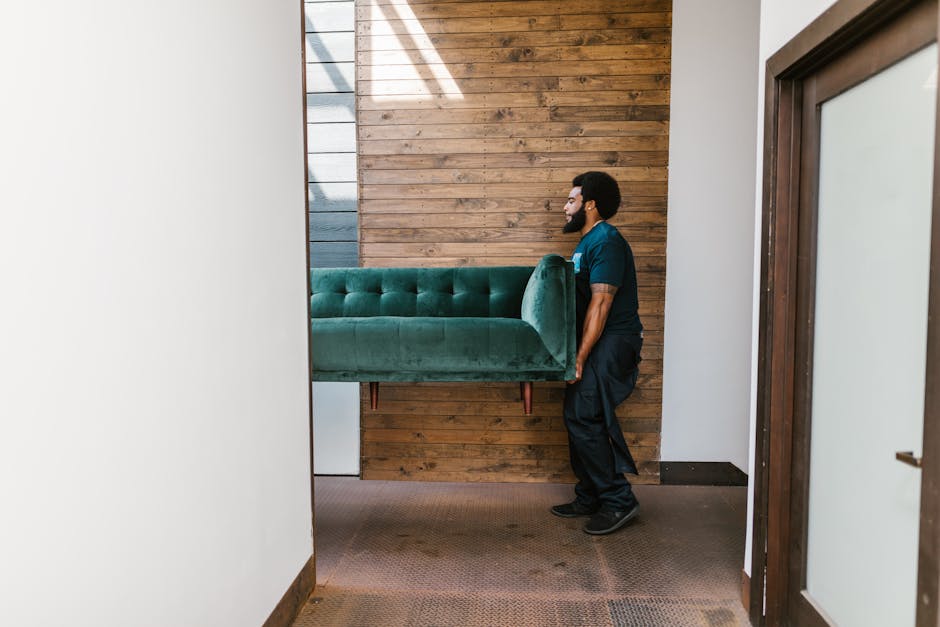
How to secure heavy furniture for removals with pro grade techniques
Moving a heavy wardrobe, sofa, solid wood table, or filing cabinet is one of those jobs that looks manageable right up until you try to turn it through a narrow hallway. Then the scratches appear, someone's back twinges, and suddenly the whole day feels longer. If you want to know how to secure heavy furniture for removals with pro grade techniques, the real answer is not just "wrap it well". It is about preparing the item, stabilising loose parts, controlling movement, protecting finishes, and loading it so nothing shifts in transit.
This guide walks you through the process in plain English. You will learn what professional movers actually do, which tools make the biggest difference, where most people go wrong, and how to decide when DIY is sensible versus when a proper removal team is worth it. To be fair, a lot of damage happens before the van even leaves the driveway.
Table of Contents
- Why securing heavy furniture matters
- How the method works in practice
- Key benefits and practical advantages
- Who needs this and when it makes sense
- Step-by-step guidance
- Expert tips for better results
- Common mistakes to avoid
- Tools, resources and recommendations
- Law, compliance, standards, or best practice
- Options, methods, or comparison table
- Case study or real-world example
- Practical checklist
- Conclusion
- Frequently asked questions
Why How to secure heavy furniture for removals with pro grade techniques Matters
Heavy furniture fails in removals for a few predictable reasons: it is awkward to grip, it has hidden weak points, and once it starts moving, it can gain momentum fast. A dresser that looks harmless in a bedroom can become a real hazard on stairs or in the back of a moving truck. If it tips, slides, or opens mid-lift, the result is often a damaged item, damaged walls, or an injury that ruins the day.
Securing furniture properly matters because it protects four things at once: the item itself, the people carrying it, the property it passes through, and the vehicle carrying it. That is true whether you are moving a single item or dealing with a full house. It is also why many households use services such as home moves or house removalists when the furniture is bulky, awkward, or simply too valuable to risk with a casual approach.
Another reason this topic matters is cost. One loose drawer banging in transit can scratch a polished sideboard. One poorly strapped cabinet can shift into another item. One forgotten bolt can mean reassembly takes twice as long. Nobody enjoys that moment when you unpack the screws and think, "Well, that's not ideal."
Expert summary: The safest removals are rarely the flashiest. They are the ones where the furniture is fully stripped down where possible, wrapped with the right materials, restrained from every direction, and loaded with zero room for surprise movement.
How How to secure heavy furniture for removals with pro grade techniques Works
Pro grade furniture securing works in layers. First, you reduce movement inside the item. Then you protect the external surfaces. After that, you stop the item from shifting against other furniture or the vehicle. Finally, you manage the route from room to van so the object stays stable the whole way.
That sequence sounds simple, but each layer matters. A strong strap alone will not save a glass-front cabinet if the drawers are rattling inside. Bubble wrap helps, but not if a table leg is still wobbling because it was never tightened. The job is about controlling all the tiny movements that turn into damage.
Professionals usually think in terms of stability, restraint, and protection. Stability means the furniture is structurally sound enough to move. Restraint means it cannot shift, roll, open, or collapse. Protection means edges, corners, and finishes are buffered against knocks and friction. If you want a practical shortcut, that's the backbone of the whole process.
For larger domestic or commercial jobs, many people prefer a vehicle suited to heavier pieces, such as a moving truck or a removal truck hire option. A suitable vehicle is not just about space. It is about tie-down points, load stability, and enough height to stack safely without pressure on vulnerable items.
Key Benefits and Practical Advantages
When heavy furniture is secured properly, the benefits show up immediately and, honestly, they're very practical.
- Less damage: Corners, veneers, upholstery, and glass panels are less likely to be marked or crushed.
- Safer lifting: Tight, stable items are easier to carry because they do not wobble halfway up a stairwell.
- Faster loading: A well-prepared sofa or wardrobe can be moved more efficiently, which saves time on moving day.
- Cleaner reassembly: Labelled parts, bagged fittings, and secured doors make set-up easier at the destination.
- Lower stress: You spend less time worrying every time the van hits a pothole. And in the UK, let's face it, that can be often enough.
There is also a business advantage for offices and commercial premises. Secure handling reduces disruption and keeps desks, storage units, and meeting furniture usable after the move. If your move involves a business site, services like commercial moves or office relocation services can be useful because they are built around structured handling, access planning, and minimising downtime.
One often-overlooked benefit is reputation. If you are moving on behalf of a landlord, workplace, or client, doing the job neatly matters. A scratched floor or a damaged cabinet does not just look bad. It suggests the move was rushed.
Who This Is For and When It Makes Sense
This approach is for anyone moving heavy, awkward, valuable, or fragile furniture. That includes homeowners, renters, office managers, landlords, letting agents, and small businesses. It is especially relevant if the item has detachable parts, a high-gloss finish, glass inserts, or weight that makes it hard to control by hand.
It makes particular sense when:
- the furniture is too large for one person to handle safely
- the route includes stairs, tight turns, or narrow doorways
- the item can be disassembled and needs reassembly later
- the furniture is valuable, antique, or easily scuffed
- the move involves multiple stops or long-distance transport
For smaller but still bulky jobs, a man with van or man and van setup may be enough, especially if you only need one or two heavy pieces moved with care. For larger homes, a full team is often the calmer choice. Truth be told, calm is underrated on moving day.
If the furniture also needs to be removed from a property permanently, you might also look at furniture pick up, particularly where the item is being collected rather than relocated. That matters because the wrapping, lifting, and loading approach can be similar, but the end goal is different.
Step-by-Step Guidance
Here is the process professionals tend to follow. It is methodical, but it saves a lot of grief later.
1. Assess the furniture before you touch it
Look for loose joints, shaky legs, open shelves, missing screws, cracked panels, and anything that might fail under pressure. Open drawers. Check doors. Test handles. If the piece feels unstable now, it will feel worse when tilted.
If a wardrobe has a wobbly back panel, do not assume the straps will fix it. They won't. In that case, the safest move is to reinforce or partially disassemble it first.
2. Empty it completely
Remove books, clothes, filing, ornaments, glass shelves, cushions, and hidden clutter from inside cupboards and drawers. Even a small amount of weight left inside can create imbalance. For desks and office storage, this step matters even more because papers and stationery seem light until they gather in one drawer and shift all at once.
3. Disassemble what can be safely removed
Take off legs, shelves, detachable headboards, mirrors, handles, and loose fixtures where practical. Store fittings in labelled bags and tape them to the furniture or keep them together in a clearly marked box. If you've ever reassembled something with "a few spare screws", you already know why this matters.
4. Protect edges and surfaces
Use furniture blankets, padded wraps, corner protectors, and stretch wrap where appropriate. The aim is not just to keep the piece clean. It is to stop friction, impact, and pressure points from damaging it during the lift or the ride. For polished wood, avoid wrapping so tightly that the finish is marked by the material underneath. A bit of judgement goes a long way here.
5. Secure doors, drawers, and moving parts
Use soft ties, removable tape, or straps to keep doors shut and drawers from sliding open. Avoid anything that leaves residue or tears a finish. For very heavy drawer units, movers may remove the drawers entirely or strap the whole unit after balancing the load. The point is to stop unexpected movement. Unexpected movement is where the trouble starts.
6. Use correct lifting equipment
Furniture dollies, stair rollers, shoulder straps, and lifting gloves are standard tools for controlled handling. The right tool depends on weight, shape, and the route ahead. A long oak sideboard and a compact but dense filing cabinet need different handling, even if they weigh roughly the same. Strange but true.
7. Carry with a plan, not a guess
Measure doorways, hallways, and stair landings before the move begins. Decide who leads, who supports, and who opens doors. Agree on stop points. If the item needs turning, rotate it deliberately and slowly. One person should always be calling the rhythm. No improvising halfway down the stairs.
8. Load the vehicle strategically
Heavy furniture should sit low and stable, with the weight distributed evenly. Use straps to anchor items to tie-down points. Keep enough space between pieces so nothing rubs or bangs. Sofas, cabinets, and tables should not be able to drift during braking or cornering. If the van is half-packed, do not assume it is safe. Empty space can be just as risky as overloading.
9. Recheck after the first movement
After the vehicle has moved a short distance, check the load if possible. The first few minutes often reveal what was missed. A strap may need tightening. A blanket may have slipped. Better to notice then than after a bend in the road.
Expert Tips for Better Results
There are a few small habits that make a big difference. They are not glamorous, but they work.
- Wrap from the bottom up: This helps keep blankets from riding up during lifting.
- Use corner protection twice for high-wear pieces: The extra padding is worth it for heavy pieces with sharp edges.
- Keep hardware in one clearly labelled place: It sounds obvious. It rarely is on a busy move.
- Lift from the strongest points: Base frames, structural rails, and solid corners usually hold better than decorative trims.
- Plan for the weather: Damp conditions, wet paths, and muddy thresholds can all affect grip and footing, especially early in the morning.
- Don't over-tighten straps on delicate finishes: Secure, yes. Crushed wood grain, no.
One pro trick is to treat every heavy item as if it has a "safe side" and a "no-pressure side". Many pieces do. A cabinet may take side pressure well but hate twisting. A sofa may tolerate straps but dislike being dragged. If you know the weak point, you can work around it instead of fighting it.
For homes with awkward access or multiple flights, sometimes the real win is not brute force. It is choosing the right moving help early. A skilled team from house removalists can often save time simply because they know how to read the space before the first lift.
Common Mistakes to Avoid
Most damage during removals comes from a handful of avoidable mistakes. The annoying part is that they are usually easy to spot in hindsight.
- Leaving drawers full: This creates imbalance and increases strain on the frame.
- Using tape directly on the finish: Adhesive residue and peeled varnish are hard to forgive.
- Dragging furniture: It saves effort in the moment and causes damage very quickly.
- Skipping dismantling: A piece that fits better in parts is usually safer in parts.
- Overpacking the van: The load becomes hard to strap correctly, and pressure points multiply.
- Ignoring the route: If the landing is tight, the sofa will not magically become smaller halfway through.
- Forgetting to label parts: Reassembly then turns into a puzzle nobody wants.
A subtle one: people often protect the visible surfaces and forget the hidden ones. That means the back panel gets scratched against a wall, or the underside gets dented on a threshold. It is a tiny oversight, but it happens all the time.
Tools, Resources and Recommendations
You do not need a warehouse full of kit, but the right tools make the process calmer and safer.
| Tool | Best use | Why it helps |
|---|---|---|
| Furniture blankets | Soft protection for wood, metal, and upholstery | Reduces scuffs and minor impact damage |
| Stretch wrap | Keeping doors, cushions, and loose parts together | Prevents movement and keeps bundles neat |
| Ratchet straps or load straps | Anchoring items inside the truck | Stops shifting during travel |
| Corner guards | Protecting sharp edges | Useful for desks, tables, and cabinets |
| Furniture dollies | Moving heavier items across flat surfaces | Reduces lifting strain and improves control |
| Lifting gloves | Grip and hand protection | Helps with control on slippery or rough surfaces |
If you are choosing between DIY and professional support, think about the combination of item weight, route difficulty, and time pressure. For example, a single heavy dresser on the ground floor is one thing. Three wardrobes, a corner sofa, and a tight stairwell is another matter entirely.
Practical resources can also include packaging and loading help. If you want the handling and packing side of the job to be managed properly, packing and unpacking services can take a lot of stress off the day. That is especially useful when your schedule is already full or the furniture includes fragile extras like mirrors, lamps, and shelves.
Law, Compliance, Standards, or Best Practice
There are a few UK best-practice points worth keeping in mind. First, movers and anyone helping with lifting should act in line with general manual handling safety principles. That means avoiding unnecessary strain, using suitable equipment, and planning lifts rather than guessing your way through them.
Second, if you are using a professional removals company, it is sensible to ask about its handling procedures, insurance arrangements, and whether staff are trained for heavy-item moves. You do not need a lecture. You just need reassurance that the basics are covered. A straightforward page like insurance and safety can be a helpful signpost when you are checking how a company thinks about risk.
Third, health and safety is not just box-ticking. For heavy furniture, the practical standard is simple: plan the move, match the method to the item, keep the load stable, and avoid uncontrolled lifting. That is good practice whether the move is domestic or commercial.
If the furniture is being removed for disposal rather than relocation, it can also be worth thinking about responsible handling and reuse where possible. Some items can be collected and passed on, while others may need recycling. A company that cares about recycling and sustainability is usually thinking beyond the single journey, which is a decent sign.
Options, Methods, or Comparison Table
There is no single best method for every item. The right approach depends on size, finish, fragility, and access.
| Method | Best for | Pros | Limitations |
|---|---|---|---|
| Full dismantling | Wardrobes, beds, modular storage | Easier to carry, safer through tight spaces | Takes time, requires labelled reassembly |
| Blanket wrap and strap | Sofas, cabinets, sideboards | Fast and protective | Does not solve structural looseness |
| Stretch wrap only | Drawer units, loose components | Quick bundling of parts | Poor on its own for impact protection |
| Dolly-assisted move | Flat-floor moves, heavy boxes, solid units | Reduces lifting strain | Less useful on stairs or uneven ground |
In practice, professionals often combine methods. A dresser might be emptied, wrapped, strapped, and dolly-moved out to the truck, then blanket-protected and tied down inside the vehicle. That layered approach is why pro grade handling works so well. It solves more than one problem at a time.
Case Study or Real-World Example
Here is a realistic example. A family moving from a terraced house had a heavy oak dresser that would not fit safely around the upstairs turn unless it was partially dismantled. At first glance, the piece looked simple enough: just a few drawers and a solid frame. But once the drawers were removed, it was obvious the side panels were far easier to manage separately than as one full unit.
The team emptied the drawers, labelled the fittings, protected the corners, and checked the route from bedroom to hallway before lifting. One person guided the front edge while the other controlled the rear weight. On the van, the dresser was set against the side wall, then strapped so it could not slide when the vehicle braked. No drama. No scraped plaster. No frantic "where did that screw go?" moment later.
What made the difference was not strength. It was preparation. The move felt slower at the start, but it was actually quicker overall because nobody had to undo a mistake halfway through. That is usually how good removals go: the careful ones look almost boring. That's a compliment, by the way.
Practical Checklist
Use this before you move any heavy item.
- Measure doorways, hallways, stairs, and tight corners
- Empty all drawers, shelves, and hidden storage
- Remove loose parts, mirrors, legs, and fittings where possible
- Label screws, bolts, and hardware clearly
- Wrap edges and vulnerable surfaces with suitable padding
- Secure doors and drawers so they cannot open in transit
- Use the correct lifting aids and enough people for the weight
- Keep the route clear of trip hazards, wet patches, and clutter
- Load heavy pieces low and stable in the vehicle
- Strap items so they cannot shift, tilt, or rub against each other
- Check the load again after the first part of the journey
If you tick those boxes, you are already ahead of many rushed moves. Really ahead.
Conclusion
Securing heavy furniture for removals is not about wrapping things quickly and hoping for the best. It is about reducing movement, protecting surfaces, planning the route, and loading with control. The best pro grade techniques are simple in principle but disciplined in execution, which is exactly why they work.
For some moves, a careful DIY approach is fine. For larger or trickier jobs, the safer choice is often a service that handles loading, transport, and protection as part of one system. If you want the job to feel less chaotic and more controlled, that is usually the right instinct.
Get a free quote today and see how much you can save.
And if there is one final thought to leave with you, it is this: a well-secured piece of furniture is not just safer in the van, it is calmer in the whole moving day story. That calm is worth a lot.
Frequently Asked Questions
What is the safest way to secure heavy furniture for removals?
The safest method is usually a combination of emptying the item, removing detachable parts, wrapping vulnerable surfaces, securing doors and drawers, and strapping the piece so it cannot move inside the vehicle. No single step does it all.
Should I dismantle heavy furniture before moving it?
If the item can be safely dismantled, yes, usually. Taking off legs, shelves, headboards, or mirrors often makes the move safer and easier. The key word is safely. If dismantling weakens the piece, stop and reassess.
Is bubble wrap enough for heavy furniture?
Not on its own. Bubble wrap can help protect delicate surfaces, but heavy furniture also needs stability and restraint. Use blankets, straps, and proper loading methods as well.
How do movers stop drawers opening during transport?
They may remove drawers entirely, secure them separately, or hold them shut with non-damaging ties or wrap. The right method depends on the furniture type and how much movement is likely.
Can I use tape directly on polished wood?
It is usually better not to. Tape can leave residue or damage the finish. A protective layer between the furniture and any fastening material is safer.
How do I move a heavy wardrobe without damaging the walls?
Empty it, remove shelves and doors where possible, protect corners, and measure the route before moving. Having one person guide the front and another control the back helps a lot in tight spaces.
What straps are best for securing furniture in a van?
Load straps or ratchet straps are commonly used because they hold items firmly in place. They must be used carefully so they do not crush delicate finishes or create pressure points.
Do I need professional help for one heavy item?
Sometimes yes, especially if the item is very heavy, valuable, awkward, or needs to be moved through stairs or narrow access. A single item can be more difficult than a whole room of lighter pieces.
How do I protect furniture corners during a move?
Use corner guards, folded blankets, or padded wraps. Corners are usually the first place to take a knock, so a little extra padding there is money well spent.
What should I check before loading heavy furniture into a truck?
Check that the furniture is secure, the load is balanced, nothing can slide, and there is no loose hardware rattling around. The vehicle itself should also have suitable tie-down points and enough space for safe placement.
How can I tell if my heavy furniture is too fragile to move myself?
If the item has loose joints, visible cracking, very fine veneer, glass sections, or awkward weight distribution, it may be better handled by professionals. If lifting it feels uncertain before you start, that is a clue in itself.
Are man and van services suitable for heavy furniture?
They can be, especially for smaller moves or a few bulky items. For larger pieces or multiple heavy units, a more fully equipped service may be a better fit. It depends on access, weight, and how much protection the items need.
What is the biggest mistake people make with heavy furniture removals?
Probably underestimating the item and overestimating how easy the route will be. People often focus on the weight and forget the turns, stairs, door widths, and loading space. That is where the trouble usually starts.